Quest for Greater LNG Adoption
Liquefied Natural Gas can serve as the ideal bridge to sustainability for India, as the country seeks to drastically reduce greenhouse gas emissions and transform itself into a green economy, while still maintaining a rapid rate of growth.
Though still a fossil fuel, natural gas is far cleaner than the solid fuels (coal, wood, briquettes, etc.) and liquid fuels (furnace oil) that currently powers the majority of India’s industry and the liquid fuels (petrol, diesel) that fuels its transport sector.
With the potential to wean India off its reliance on polluting fossil fuels, greater use of LNG can buy the country time as it transitions towards an economy majorly powered by renewable energy, helping it cut emissions without curbing economic growth.
But for the country to harness the full potential of LNG it needs an enabling framework, similar to the framework driving greater adoption of EVs. At the moment, there is promising draft legislation in the works but no set policy. As this legislation assumes concrete shape, here’s what we think it should contain if it is to truly accelerate LNG adoption.

Incentivising LNG-Powered Equipment
One way to boost LNG use is to borrow a page from the EV playbook and incentivise a conducive environment for the increased use of cleaner equipment powered by LNG. This can be done by lowering GST rates on equipment used in building mono-fuel machines that run solely on LNG. A special, lower GST rate can also be applied on vehicles using LNG, similar to the incentives offered on EVs while on the other hand levying a green cess to disincentivise engines running on polluting fuels. A special ‘blue’ number plates, similar to the ‘green’ number plates used on EVs, can be introduced for LNG-powered vehicles making them eligible for lower road taxes and tolls.
Building Infrastructure
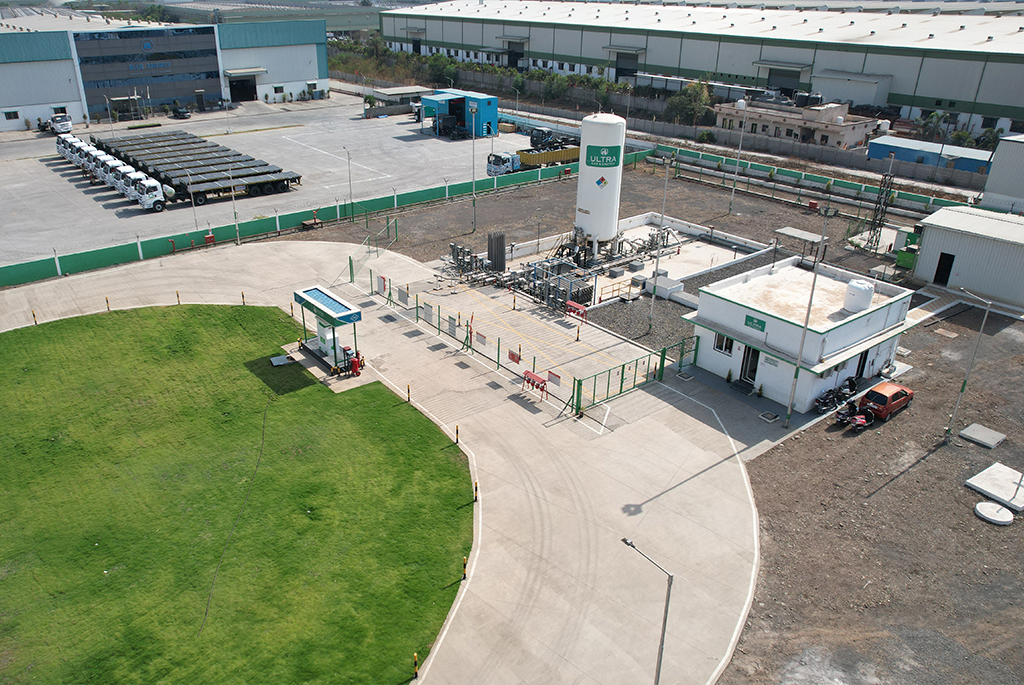
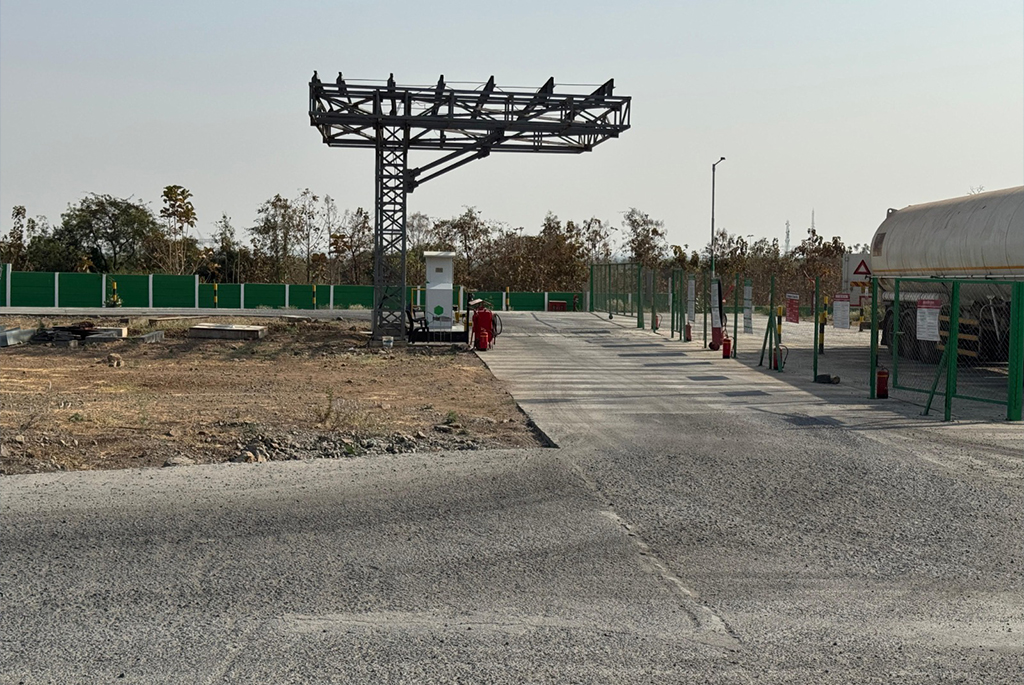
One of the key measures to enable an LNG-friendly ecosystem is putting in place the required infrastructure. As EV policies have shown, there’s no point rolling out an enabling framework without the infrastructure to back it up. To be truly effective, India needs to set up LNG terminals, establish retail outlets, and create a virtual pipeline network by building a transportation, distribution and manufacturing backbone for LNG-powered vehicles. Moreover, the accountability framework needs to be strengthened, the approvals process needs streamlining via measures like single-window online clearance portals.
Bridging the Skills Gap, Making Tech Affordable
India also needs a skilled workforce that can handle LNG safely – skills like cryogenics for instance need to be incorporated into engineering curricula. Start-ups should also be encouraged to harness their entrepreneurial zeal so we can have home-grown and therefore cheaper LNG technology. India is a hotbed of startup activity, we should be harnessing this entrepreneurial spirit via measures like tax holidays to drive the technological evolution of the LNG sector.
Conclusion
LNG is an indispensable part of India’s energy mix if it wants to truly achieve its climate goals and commitments. Renewable energy is the future but the path to that future is paved with LNG.
A robust LNG ecosystem is crucial to India fulfilling its COP26 commitments. A few of the ideas mentioned here will go a long way in making India a green economy.
FAQs
LNG is growing in popularity due to its various benefits and advantages. Globally, Natural Gas production is rising due to the advances in the drilling and discoveries happening in deep water and unexplored territories.
Due to increased natural gas production, countries rich with the natural gas production can import and export natural gas thus improving trade relations with countries and thus opening new markets. Further, every day improving technologies of liquefaction has also seen as a great contributing factor for increased availability of LNG in global trade markets.
LNG has the potential to become a popular fuel and has inherent characteristics to become fuel of future.
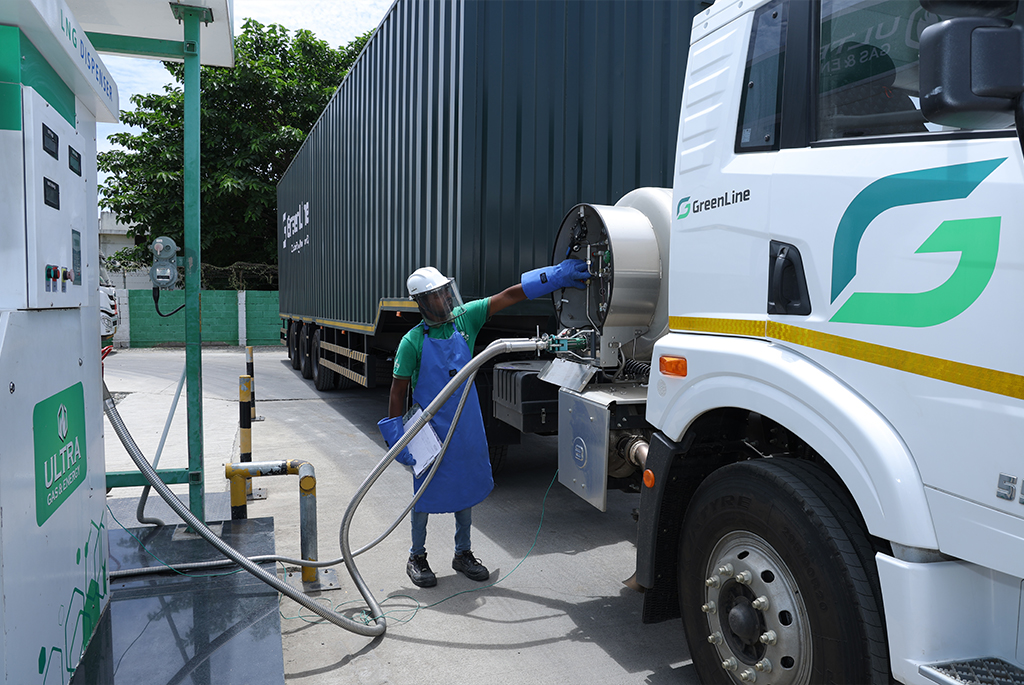
LNG has to be maintained at -162⁰ C during storage or transportation from one place to another. It transferred from LNG tankers that arrive at port into cryogenic tankers mounted on trucks and then again transferred into storage tanks installed at the Retail Outlet. At the Retail Outlet, specially designed LNG Dispensers are installed through which LNG in liquid form is directly transferred to the cryogenic payload tank mounted on Heavy Duty Vehicles.
Natural Gas is a naturally occurring hydrocarbon gas mixture consisting primarily of methane, but commonly including varying amounts of other higher alkanes, and sometimes a small percentage of carbon dioxide, nitrogen, hydrogen sulfide, or helium.
It is formed when layers of decomposing plant and animal matter are exposed to intense heat and pressure under the surface of the Earth over millions of years. The energy that the plants originally obtained from the sun is stored in the form of chemical bonds in the gas.
Natural Gas is a non-renewable hydrocarbon used as a source of energy for heating, cooking, and electricity generation. It is also used as a fuel for vehicles and as a chemical feedstock in the manufacture of plastics and other commercially important organic chemicals.
LNG is a liquefied form of Natural Gas, formed when it is cooled to -162⁰ C at the atmospheric pressure of 15 bars (sea level pressure).
Its important characteristics are:
- Cleanest Burning Fossil Fuel
LNG is the cleanest burning fossil fuel as it emits less pollutants as compared to coal, fuel oil, diesel, petrol, etc. and other commonly used fuels.
- Easy to Store
Compared to other fuels having similar burning & environmental friendly characteristics, LNG is far superior in terms of its calorific to volume ratio, meaning it takes far lesser space for storage and is not expensive on real-estate requirement.
- Economical for Transport
On account of its smaller form factor compared to other fuels having same calorific content, LNG is the most economical fuel in its class to transport. LNG can be transported economically over longer range of distances.
- Safe for Transport and Use
LNG is not explosive or flammable in liquid state and is the safest fuel during its transportation. Further, as it is lighter than air, in case of any leakages, the non-toxic gas simply vaporises and is therefore far less susceptible to an explosion or any other hazardous incident.
- Multiple Source
- LNG is available from multiple overseas suppliers from various parts of the world, thereby eliminating the risks of supply deficit or supply interruption.
The fast paced economic growth of Indian economy has led to an ever increasing demand of energy. Currently, India is the third largest energy consumer in the world after China & USA. India’s energy requirements are majorly fulfilled by coal, crude oil, natural gas and other sources.
Industries and other economic sectors are becoming more and more conscious towards emissions and understands the impact of businesses on environment and health. This brings about a shift in the energy consumption pattern from existing high polluting fuel to cleaner fuels which are less polluting in nature.
Natural Gas is one of the cleanest fuels, is easily available in India and with an equivalent calorific value, it acts as a catalyst for energy transition from existing high polluting fuels.
The Government of India’s focus on making India a gas based economy has led to the advancements in domestic gas production and increase in LNG import. Natural gas availability and consumption has seen a rapid growth over the past decade.
The gas consumption for the years 2018-2019 & 2019-2020 have been 166.57 MMSCMD & 175.74 MMSCMD respectively. The consumption for year 2020-21 is slated to be ~165 MMSCMD.
Under the Government of India’s Vision 2030, natural gas consumption targets are set at 474 MMSCMD by 2029-30 which would reflect as 15% of the country’s total energy consumption. Changes in the energy consumption pattern would help the country to reduce harmful gas emissions and carbon footprint thereby enhancing the environment quality & sustainability.
The support of the Government of India in the form of policy reforms & initiatives, reduced bottlenecks and improved infrastructure is enabling increase in consumption of natural gas and has built energy security for various economic and commercial sectors.
When Natural Gas is available in surplus in locations where it cannot be consumed on account of less demand, it is either compressed or liquefied for the better logistical cost to be transported over longer distances.
Waterways are the cheapest form of transportation globally and when LNG has to be transported across continents it is shipped through LNG tankers. On being docked at land mass, LNG is transported through LNG tankers mounted on truck trailers or rail wagons, or transported through gas pipelines in regasified form. Converting Natural Gas to LNG is an easy and economical way of transporting natural gas from the source to the consumption point.
Traditionally, LNG has been used as fuel and/or feedstock by various industry sectors viz. paints & dyes, fertilizers & pesticides, plastics, metal processing, pharmaceuticals & chemical, dairy and food processing, agro based industries, electricity generation and many more. Nowadays, LNG, in compressed gas form, as CNG is being used for small automotive applications, and LNG in its liquid form is being used to replace diesel in Heavy Duty Vehicles for long-haul automotive applications.
LNG is warmed up to its gaseous form or re-gasified through vaporizers and can be used in heating, cooking, electricity generation, industrial use, city gas distribution and other uses. It can also be used as an alternative transportation fuel and is directly fired in the engines. There is much more future scope for LNG as it is a good source for sustainable energy.
LNG is the cleanest burning fossil fuel as it emits far lesser pollutants, gas as well as particulate, than coal, oil and other commonly used fuels.
LNG is not explosive, flammable or toxic thus safer to transport and use. It is also very convenient to store.
The liquefaction process also allows surplus natural gas to be transported from source(s) to demand centres. LNG is a versatile energy source as it serves multiple sectors – residential, commercial, electricity generation, transportation, and industrial sectors such as production of paints, fertilizers, plastics, dyes and many more.
Heavy duty fleets are moving to LNG as it also helps to reduce greenhouse gas emissions and saves vehicle and maintenance costs.
LNG has to be maintained at -162⁰C during storage or transportation from one place to another. It is transferred from LNG tankers that arrive at port into cryogenic tankers mounted on trucks and then again transferred in to local storage tanks installed at the industries. Along with storage tanks, vaporizers are installed at industry premises that converts LNG back into a gaseous state for combustion.